
Rodent Species Guide
Roof Rats: Identification, Characteristics, Habits and Signs
Roof rats (Rattus rattus) are agile, slender rodents known for climbing and nesting in elevated spaces. They are also called black rats or ship rats. Around buildings, they may use trees, dense vegetation, rooflines, wall voids, and attics as routes or shelter.
Although their name suggests that they live only on roofs, these rodents can occupy several types of elevated and sheltered locations. Their presence may be indicated by droppings, gnaw marks, greasy rub marks, damaged food, scratching sounds, or movement in ceilings and attic spaces.
This guide explains how to identify this species, understand its habitat and behaviour, recognize possible signs of activity, and reduce conditions that allow rodents to access buildings. It also compares these animals with Norway rats, which are larger and generally more associated with ground-level burrows.
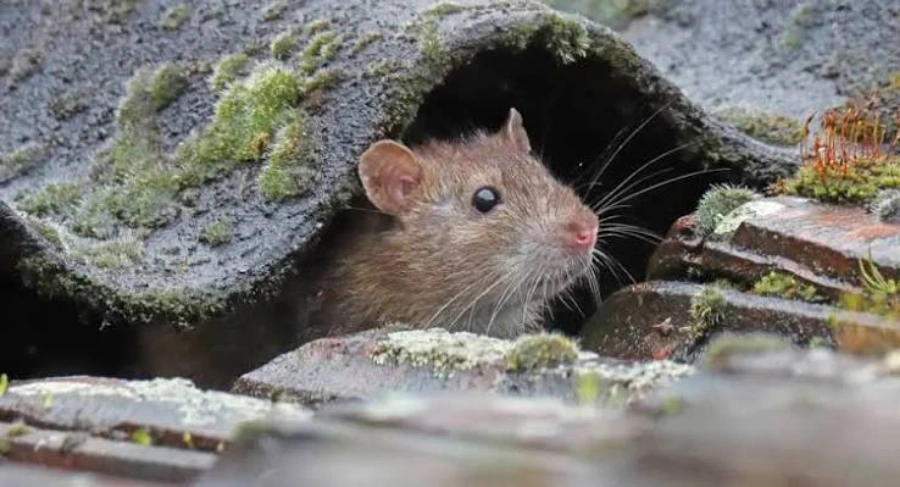
What Are Roof Rats?
A roof rat is a medium-sized rodent belonging to the species Rattus rattus. It is commonly known as the black rat, although its fur is not always black. Individuals may have blackish, brownish, or grayish colouring.
The species is an introduced rodent in North America and is strongly associated with human environments. It can live around homes, warehouses, farms, food-storage facilities, and other buildings where food and shelter are available.
These rodents are especially well adapted to climbing. They can travel along branches, fences, wires, pipes, and other elevated structures. They commonly nest above ground, including in trees, shrubs, attics, and enclosed spaces within buildings.
Roof Rat Scientific Name and Classification
The scientific name is Rattus rattus. It belongs to the family Muridae, which includes many species of rats and mice.
| Classification | Name |
|---|---|
| Common name | Roof rat |
| Other common names | Black rat, ship rat |
| Scientific name | Rattus rattus |
| Kingdom | Animalia |
| Phylum | Chordata |
| Class | Mammalia |
| Order | Rodentia |
| Family | Muridae |
| Genus | Rattus |
| Species | Rattus rattus |
The terms "roof rat" and "black rat" generally refer to the same species. However, coat colour alone is not a reliable way to identify it because some individuals are brownish or grayish.
What Do Roof Rats Look Like?
These rodents have a relatively slender body, a pointed muzzle, prominent ears, and a long tail. Their fur can range from blackish to brownish or gray. The underside is often lighter than the back.
Compared with a Norway rat, this species usually looks more streamlined and less stocky. Its tail is typically longer than the combined length of its head and body, which is one of the most useful identification characteristics.
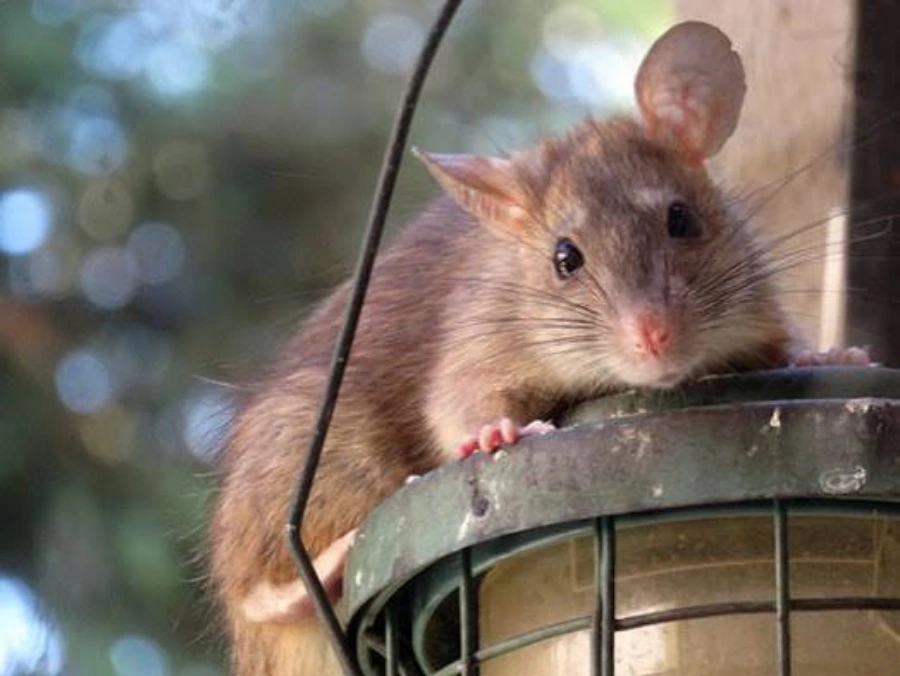
Common identification features
- Slender, agile body.
- Blackish, brownish, or grayish fur.
- Pointed muzzle.
- Relatively large ears.
- Large, noticeable eyes.
- Long, mostly hairless, scaly tail.
- Tail usually longer than the head and body combined.
- Strong climbing ability.
A dark rat seen near a roof is not automatically a roof rat. Identification should consider body proportions, tail length, head shape, droppings, nesting location, and other signs together.
Roof Rat Size, Body Structure and Tail
How big are they?
Adult roof rats are generally smaller and more slender than Norway rats. Texas A&M AgriLife Extension describes adults as approximately 5–10 ounces in weight, with a total length of around 12–18 inches, including the tail.
The exact measurements vary by individual and reference. A long tail is one of the species’ characteristic features.
| Physical characteristic | Typical description |
|---|---|
| Body shape | Slender and agile |
| Approximate weight | 5–10 ounces |
| Approximate total length | 12–18 inches, including tail |
| Tail | Long, usually longer than head and body combined |
| Fur colour | Blackish, brownish, or gray |
| Muzzle | Pointed |
| Ears | Relatively large |
Why is the tail important?
The tail helps with balance while climbing and moving along narrow structures. Its length is also useful when comparing this animal with Norway rats.
A roof rat’s tail is generally longer than its head and body combined. A Norway rat’s tail is usually shorter than its head-and-body length. This is a useful field clue, but it should not be the only basis for species identification.
Where Do Roof Rats Live?
These rodents can live in natural outdoor habitats and around human buildings. They often use elevated, sheltered locations where they can find nesting materials and travel without spending much time on open ground.
Common outdoor habitats
- Trees and mature vegetation.
- Dense shrubs and climbing vines.
- Overgrown fences and walls.
- Vegetated areas near buildings.
- Sheds, barns, and agricultural structures.
- Areas where food, water, and shelter are available.
Common indoor habitats
- Attics and roof spaces.
- Ceiling voids.
- Wall cavities.
- Cabinets and storage areas.
- Garages and outbuildings.
- Enclosed spaces near rooflines and utility connections.
These rodents are agile climbers and commonly nest above ground. However, they may also use lower spaces or occasionally burrow, particularly when elevated nesting sites are unavailable. Their habitat preference should not be treated as an absolute rule.
Roof Rats in Texas: What Is Known?
Texas Tech University’s Natural Science Research Laboratory describes the black rat (Rattus rattus), also known as the roof rat, as common across most of Texas, especially in towns.
The same account notes that these rodents live close to people and may be found in buildings such as stores, warehouses, feed facilities, poultry houses, barns, and granaries. It also describes their frequent use of attics, rafters, and crossbeams.
This provides a reliable statewide context for the species. It does not mean that every Texas town or Houston neighbourhood has the same level of activity. Local presence can vary with building conditions, vegetation, food availability, and other environmental factors.
For Houston property owners, the practical lesson is to pay attention to elevated access routes, roofline gaps, vegetation near buildings, and possible activity in attics or ceiling spaces rather than assuming that every rat sighting involves the same species.
Why Are They Called Roof Rats?
The common name comes from their tendency to climb and use elevated nesting locations. They may travel along tree branches, fences, utility lines, roof edges, and other structures to reach food or shelter.
Attics, rafters, ceiling voids, and upper wall spaces can provide protected nesting locations. These habits make the roofline and upper parts of a building important areas to consider when investigating possible activity.
The name does not mean that the animal lives exclusively on roofs. It can also nest in trees, shrubs, dense vegetation, and other sheltered locations.
Roof Rats in Attics and Roof Spaces
Attics can provide a suitable environment because they are often quiet, sheltered, and less frequently disturbed. These rodents may use insulation, stored materials, and enclosed spaces as nesting locations.
Possible signs in an attic
- Dark, elongated droppings.
- Scratching or scurrying sounds after dark.
- Gnaw marks on stored materials or building components.
- Shredded insulation or nesting material.
- Greasy rub marks along rafters or travel routes.
- Damaged wiring or packaging.
- A persistent musky odour in enclosed areas.
Texas A&M AgriLife Extension identifies attics and double walls as common roof-rat nesting locations. It also describes droppings, tracks, gnawing, greasy smears, runways, and sounds as signs that may indicate rodent activity.
Not every noise in a ceiling indicates rodents. Building movement, plumbing, ventilation, and other animals can produce similar sounds. Look for supporting evidence before drawing conclusions.
Roof Rat Nests and Nesting Locations
A nest is a sheltered structure made from available materials. These may include leaves, twigs, paper, fabric, insulation, and other fibres.
These rodents often select locations that provide protection from weather and predators while remaining close to food and travel routes.
Where do they nest?
Common nesting locations include:
- Attics and roof spaces.
- Tree cavities and dense branches.
- Shrubs and thick vegetation.
- Wall and ceiling voids.
- Climbing vines and overgrown structures.
- Sheds, barns, and storage buildings.
- Enclosed areas around stored materials.
Nests in trees
Outdoor nests may be located in dense branches, tree cavities, or thick vegetation. A tree near a building can also provide a route toward the roofline, particularly where branches touch or hang close to the structure.
Not every tree near a home contains a nest, and the presence of trees alone does not confirm rodent activity. Look for additional signs such as droppings, gnawing, or repeated movement along branches.
What Do Roof Rats Eat?
These rodents are opportunistic feeders. Their diet may include fruits, nuts, seeds, grains, vegetables, food waste, and other available food sources. They may also consume insects and other small food items.
Common food sources
- Fruits and berries.
- Nuts and seeds.
- Grains and stored food.
- Pet food and animal feed.
- Food scraps and rubbish.
- Vegetation and other plant material.
- Insects and other small food items.
Around homes, accessible rubbish, pet food, fallen fruit, bird seed, and poorly stored food may provide feeding opportunities.
They may feed outdoors and then travel to sheltered nesting locations. The location of food damage does not necessarily identify the nest.
Roof Rat Droppings: Appearance and Identification
Droppings are generally dark, elongated, and tapered at the ends. They are often described as spindle-shaped or banana-shaped.
A typical dropping is approximately one-quarter to one-half inch long, although size and appearance can vary. Fresh droppings are usually darker, while older material may become duller or lighter.
Where might droppings be found?
Look for droppings in locations such as:
- Attics and roof spaces.
- Rafters and ceiling voids.
- Along elevated travel routes.
- Near stored food or animal feed.
- Behind boxes and stored materials.
- Around suspected nesting locations.
- Near wall or ceiling openings.
Can droppings confirm the species?
Droppings can provide a useful clue, but they cannot reliably identify the species on their own. Other rodents may leave waste with a similar appearance.
Consider the size and shape of the droppings together with their location, tail or body evidence from a sighting, nesting patterns, and other signs.
Safe handling of rodent droppings
Important safety guidance: Do not sweep or vacuum dry rodent droppings. Disturbing contaminated material can put particles into the air.
The CDC recommends wetting rodent waste with an appropriate disinfectant, allowing the recommended contact time, and wiping it up while wearing suitable protective equipment. Follow the CDC’s detailed cleanup instructions.
Extensive contamination, contaminated insulation, or difficult-to-access spaces may require professional guidance.
Roof Rat Noises and Activity Patterns
These rodents are generally secretive. People may hear them moving through concealed spaces when the surrounding environment is quiet.
Common noises
- Scratching in ceilings or walls.
- Scurrying across attic surfaces.
- Gnawing sounds.
- Rustling in insulation or stored materials.
- Occasional squeaking or other vocal sounds.
Sounds alone cannot establish which species is present. The location of the sound and other physical evidence should also be considered.
How Do Roof Rats Get Into Your House?
These rodents can reach buildings by climbing nearby structures and using small openings around the roofline or exterior walls.
- Tree branches close to roofs.
- Utility wires and cables.
- Climbing vines and vegetation.
- Rough exterior walls.
- Roof and soffit gaps.
- Damaged vents and screens.
- Openings around pipes and utility lines.
- Gaps around roof-to-wall connections.
- Damaged fascia and other exterior components.
A rat may use a branch, fence, cable, or other structure to reach an elevated opening. Checking only doors and ground-level gaps may therefore miss possible access routes.
Roof Rat Entry Points and Climbing Abilities
Can they climb walls?
These rodents are agile climbers. They can climb many rough or textured surfaces and travel along branches, wires, pipes, fences, and other structures.
Smooth surfaces may be more difficult to climb, but nearby objects can provide an alternative route. The surrounding building and landscaping should be considered together when looking for possible access points.
Common entry points
- Gaps at roof edges and eaves.
- Openings around soffits and fascia.
- Damaged roof vents.
- Gaps around utility lines.
- Openings around pipes and cables.
- Broken or poorly fitted screens.
- Gaps around doors and windows.
- Openings where additions or building materials meet.
A potential opening does not prove that a rodent is using it. Evidence such as rub marks, droppings, gnawing, or repeated activity can help identify areas that may need closer attention.
For a preliminary self-assessment, use the Rodent Entry Point Checker: It helps users review possible access areas but does not physically inspect a building or confirm that a particular opening is being used.
Roof Rat Behaviour: Are They Nocturnal?
These rodents are primarily nocturnal, meaning they are generally more active at night. They may leave sheltered locations to search for food and water after dusk.
They are also cautious and may use familiar travel routes along branches, fences, wires, rafters, and other structures. Their climbing ability allows them to move between outdoor vegetation and elevated parts of buildings.
Where do they live during the day?
During daylight, they may remain in nests or protected hiding places. These can include:
- Attics and ceiling voids.
- Tree cavities and dense branches.
- Thick shrubs and vines.
- Wall cavities.
- Sheds and other enclosed structures.
A daytime sighting does not, by itself, establish the size or severity of a rodent problem. Consider the overall pattern of evidence rather than relying on one observation.
Roof Rat Reproduction and Lifespan
These rodents can reproduce throughout the year in suitable conditions, particularly where food, water, and shelter are available.
Texas A&M AgriLife Extension describes a gestation period of approximately 21–23 days and litters commonly containing around five to eight young. The young are weaned after several weeks, and maturity may be reached at around three months. Reproductive performance varies with environmental conditions and individual animals.
How long do they live?
Lifespan varies according to food availability, disease, predators, environmental conditions, and other pressures. Texas A&M’s school integrated pest management guidance gives a broad adult lifespan range of approximately five to eighteen months. Individual animals may live for shorter or longer periods.
A population can persist even when individual rats have relatively short lifespans if reproduction and access to suitable shelter continue.
Are Roof Rats Dangerous?
These rodents can create hygiene, health, and property concerns. Their presence does not mean that a person will necessarily become ill, but contact with rodent waste or contaminated materials should be avoided.
Potential concerns include:
- Food contamination: Droppings, urine, and contact with food-storage areas can create hygiene risks.
- Pathogen exposure: Rodents can carry organisms that may cause illness. The specific risk depends on the animal, pathogen, and exposure.
- Property damage: Gnawing may damage stored items, packaging, insulation, and other materials.
- Electrical concerns: Chewing may damage wiring or components.
- Nesting contamination: Nesting materials and waste can accumulate in enclosed spaces.
Do roof rats carry Seoul virus?
It is important to be precise about species and disease. The CDC identifies Norway rats (Rattus norvegicus) as the primary carriers of Seoul virus. This should not be incorrectly presented as a roof-rat-specific disease claim.
Our rodent diseases hub explains the health risks linked to each species.
Avoid direct contact with wild rodents, droppings, urine, saliva, and nesting materials. Follow public-health guidance for safe cleanup.
Roof Rat Prevention and Exclusion
Prevention focuses on reducing food and shelter opportunities and limiting access to buildings. Because these rodents can climb, prevention should include the roofline and upper parts of the structure, not just ground-level openings.
1. Review branches near the roof
Keep branches from providing easy access to roof surfaces. Pruning should be appropriate for the tree and property; removing every tree is not necessary or a guaranteed way to prevent rodents.
2. Manage vines and dense vegetation
Inspect climbing plants and dense vegetation near exterior walls, fences, and rooflines. Reduce direct access routes where practical.
3. Secure food and rubbish
Store pet food, bird seed, animal feed, and other food in secure containers. Keep rubbish bins closed and clean up fallen fruit where it is attracting rodents.
4. Inspect roofline openings
Check soffits, fascia, vents, eaves, and other roof connections for damage or gaps. Repair openings with suitable rodent-resistant materials.
5. Seal utility openings
Look for gaps around cables, pipes, and other service connections. Use appropriate materials that can resist gnawing and remain suitable for the building component being repaired.
6. Maintain screens and vents
Repair damaged screens and fit suitable protective covers where appropriate. Do not block ventilation openings in a way that creates moisture, fire, or building-code problems.
7. Reduce clutter
Organize storage areas, garages, sheds, and spaces near the building. Remove unnecessary piles of materials that may provide shelter.
8. Monitor for recurring signs
Check for fresh droppings, gnaw marks, damaged food, rub marks, and repeated sounds. If evidence continues to appear, the source and possible access routes may need further assessment.
Professional Roof Rat Control and Removal
Prevention can reduce opportunities for rodents to enter, but recurring activity may indicate that an animal is nesting in a concealed location or that access points remain open.
Consider speaking with an appropriately qualified pest-control provider when:
- You repeatedly hear movement in an attic or ceiling.
- Droppings continue to appear.
- Gnawing or damage is recurring.
- You suspect a nest in an inaccessible area.
- Roofline or structural openings need assessment.
- Rodent waste or contaminated insulation is extensive.
A provider may discuss species identification, the likely extent of activity, control methods, exclusion work, and cleanup needs. Ask about qualifications, service coverage, methods, pricing, and the scope of work before arranging a service.
For people seeking professional options in the Houston area, visit the Rat Removal Houston service page.
For information about preventing access through building openings, see Rodent Exclusion in Houston.
Website disclosure: This website is an enquiry and connection resource. Independent service providers—not this website—perform inspections, treatments, rat removal, exclusion, and related work. Provider availability, qualifications, coverage, pricing, and scope must be confirmed directly with the provider.
Exploring Rodent Control Options in Houston?
If you have recurring signs of rodent activity, you may wish to explore the available rat-removal information and discuss your property with an independent service provider. Confirm service availability, qualifications, pricing, and scope directly with the provider.
Explore Rat Removal OptionsCheck Possible Entry PointsRoof Rat vs. Norway Rat: What Is the Difference?
Roof rats and Norway rats are two different species. Correct identification matters because their body structure, preferred nesting locations, and typical movement patterns differ.
Roof rats are generally smaller and more slender, with a tail longer than the head and body combined. Norway rats are larger and stockier, with a blunter muzzle and a tail that is usually shorter than the head and body.
| Feature | Roof rat | Norway rat |
|---|---|---|
| Scientific name | Rattus rattus | Rattus norvegicus |
| Common names | Black rat, ship rat | Brown rat, sewer rat |
| Body shape | Slender and agile | Larger and stockier |
| Typical colour | Blackish, brownish, or gray | Usually brownish or gray |
| Muzzle | Pointed | Blunter |
| Ears | Relatively large | Smaller relative to head |
| Tail | Usually longer than head and body combined | Usually shorter than head and body |
| Typical nesting location | Trees, shrubs, attics, roof spaces, and elevated voids | Ground-level burrows, lower building areas, and sheltered spaces |
| Climbing behaviour | Particularly agile climber | Can climb, but is more commonly associated with ground-level habitats |
| Droppings | Often around ¼–½ inch, tapered | Generally larger, often with blunter ends |
Which rat is more likely to be in an attic?
An elevated nest or repeated activity in an attic may suggest a roof rat, but location alone does not confirm the species. Norway rats can also enter buildings and use sheltered spaces.
Look at body shape, tail proportions, droppings, travel routes, and other evidence together. Read the Norway Rat identification guide for more detail.
Frequently Asked Questions About Roof Rats
What is a roof rat?
A roof rat is a rodent belonging to the species Rattus rattus. It is also called a black rat or ship rat. It is a slender, agile climber that commonly nests above ground in trees, shrubs, attics, and other sheltered elevated spaces.
What does a roof rat look like?
It usually has a slender body, pointed muzzle, relatively large ears, and a long tail. Its fur may be blackish, brownish, or gray. Its tail is typically longer than its head and body combined.
Why are they called roof rats?
They are called roof rats because they commonly climb and use elevated places such as roofs, rafters, attics, trees, and overhead structures. They do not live exclusively on roofs.
How big do roof rats get?
Adults are commonly described as weighing around 5–10 ounces and measuring approximately 12–18 inches in total length, including the tail. Individual measurements vary.
Where do roof rats live?
They may live in trees, shrubs, dense vegetation, attics, wall voids, ceiling spaces, sheds, barns, and other sheltered locations. They often use elevated routes and nesting sites.
Do roof rats live in attics?
Yes. Attics can provide protected nesting areas. They may also use rafters, ceiling voids, wall cavities, and other enclosed spaces. Droppings, scratching sounds, gnaw marks, and greasy rub marks may indicate activity.
Where do roof rats nest?
They may nest in trees, dense shrubs, tree cavities, attics, roof spaces, wall voids, ceiling spaces, and other sheltered locations. Their nests may contain leaves, paper, fabric, insulation, and other materials.
What do roof rats eat?
They are opportunistic feeders that may eat fruits, nuts, seeds, grains, vegetables, pet food, animal feed, rubbish, and other available food. Their diet depends on what is accessible in their environment.
How can you identify roof rat droppings?
Droppings are typically dark, elongated, and tapered at the ends. They are often around one-quarter to one-half inch long. Droppings alone cannot reliably confirm the species, so consider other evidence as well.
What sounds do roof rats make?
People may hear scratching, scurrying, gnawing, rustling, or occasional squeaking. Sounds are often more noticeable at night when the building is quiet. Other animals and building systems can produce similar noises.
How do roof rats get into a house?
They can climb trees, wires, fences, vines, pipes, and rough exterior surfaces to reach openings around rooflines, eaves, vents, soffits, utility connections, and other parts of a building.
Can roof rats climb walls?
Yes. They are agile climbers and can move over many rough or textured surfaces. They can also use branches, wires, pipes, fences, and vines as routes toward elevated openings.
Are roof rats dangerous?
They can contaminate food and surfaces, damage materials through gnawing, and create health concerns through contact with rodent waste. Avoid touching wild rodents or their droppings and follow public-health cleanup guidance.
How can you prevent roof rats from entering an attic?
Inspect roofline gaps, soffits, vents, fascia, and utility openings. Manage branches and climbing vegetation near the building, secure food and rubbish, repair damaged screens, and seal suitable openings with rodent-resistant materials. Do not block required ventilation.
What is the difference between a roof rat and a Norway rat?
Roof rats are generally smaller and more slender, with a pointed muzzle and a tail longer than their head and body combined. Norway rats are larger and stockier, with a blunter muzzle and a shorter tail relative to body length. Roof rats more commonly nest in elevated locations, while Norway rats are more associated with ground-level burrows.
Sources and Further Reading
- Texas Tech University — Species Account of the Black Rat
- Texas A&M AgriLife Extension — Managing Rats and Mice
- University of California IPM — Rats
- University of Arizona Cooperative Extension — Roof Rat Identification, Ecology, and Signs
- Texas A&M School Integrated Pest Management — Rodent Action Plan
- CDC — Veterinary Guidance for Testing for Seoul Virus in Pet Rats