
RODENT EXCLUSION & PROOFING IN HOUSTON
Rodent Exclusion & Proofing in Houston, TX
Rats and mice can enter a property through surprisingly small openings. Gaps around doors, rooflines, vents, pipes, utility lines, and garage doors can provide access to sheltered spaces inside a building.
Rodent exclusion in Houston focuses on identifying potential entry points and sealing or reinforcing suitable openings to make a property harder for rodents to enter. Rather than concentrating only on rodents already inside, exclusion addresses the physical routes they may use to get in.
Rodent Control Houston connects property owners with independent service providers for rodent-related assistance. The actual inspection, sealing methods, repair work, and pricing depend on the provider and the conditions found at your property.
Discuss possible rodent entry points and ask about arranging an assessment.
What Is Rodent Exclusion and Why Does It Matter?
Rodent exclusion is the process of finding openings that rats or mice may use to enter a building and closing or reinforcing those openings with suitable materials.
A mouse can fit through an opening approximately the width of a pencil. This is why checking only large holes or obvious damage may not be enough.
Rodent proofing may involve inspecting:
- Gaps around exterior doors and garage doors.
- Openings around plumbing and utility lines.
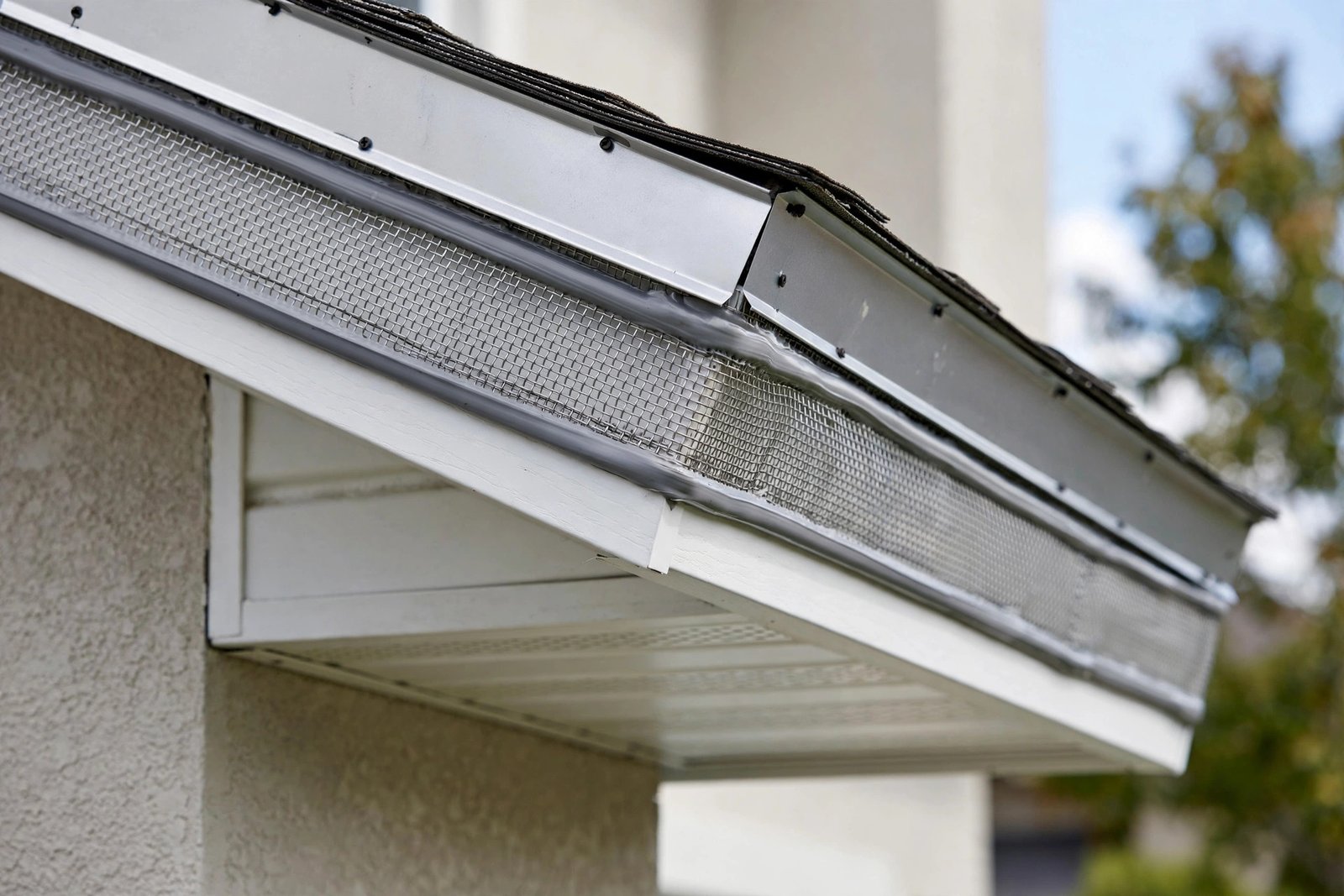
- Roof edges, eaves, soffits, and roof penetrations.
- Attic and foundation vents.
- Gaps around windows and exterior wall joints.
- Openings around air-conditioning or other service penetrations.
- Cracks and gaps where building materials meet.
The objective is to reduce rodent access by addressing suitable entry points. Exclusion is not the same as trapping or removing rodents already inside the building.
For an effective prevention plan, entry-point sealing should be considered alongside appropriate rodent removal and good property sanitation where needed.
Rodent Entry-Point Inspection in Houston
A rodent exclusion project should begin by understanding how rodents may be entering the property.
A rodent entry-point inspection looks for openings, damaged screens, loose seals, gaps, and other weaknesses that could allow rodents to enter.
Depending on the property and inspection scope, the assessment may include:
Exterior Inspection
- Foundation and lower walls: Look for gaps around the foundation, siding, joints, and other ground-level openings.
- Doors and garage doors: Check for gaps beneath doors, worn weatherstripping, damaged bottom seals, and spaces around garage-door edges.
- Roofline and eaves: Look for openings around roof edges, soffits, fascia, and other accessible roof features.
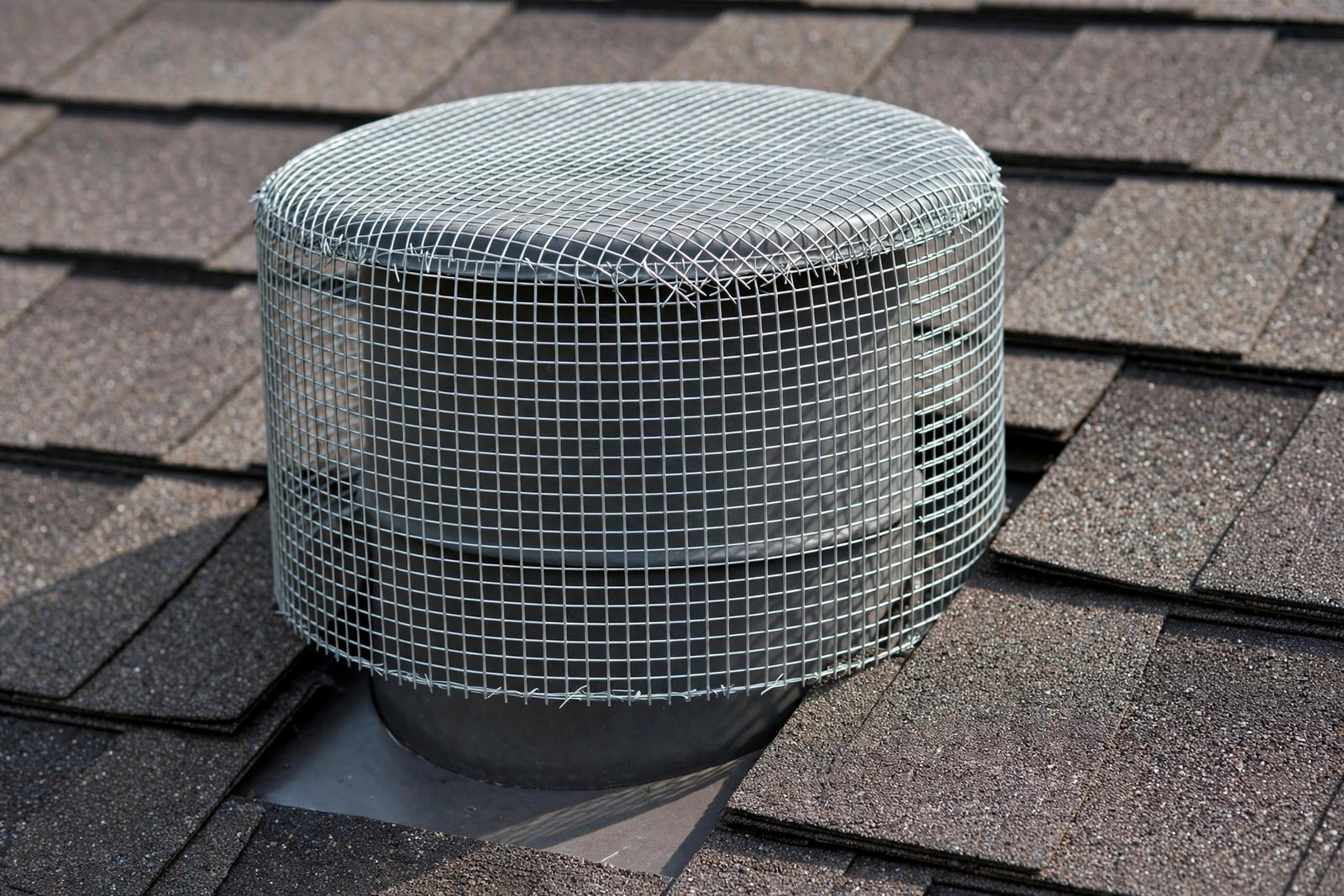
- Vents and screens: Check whether attic, foundation, and other exterior vents are properly screened.
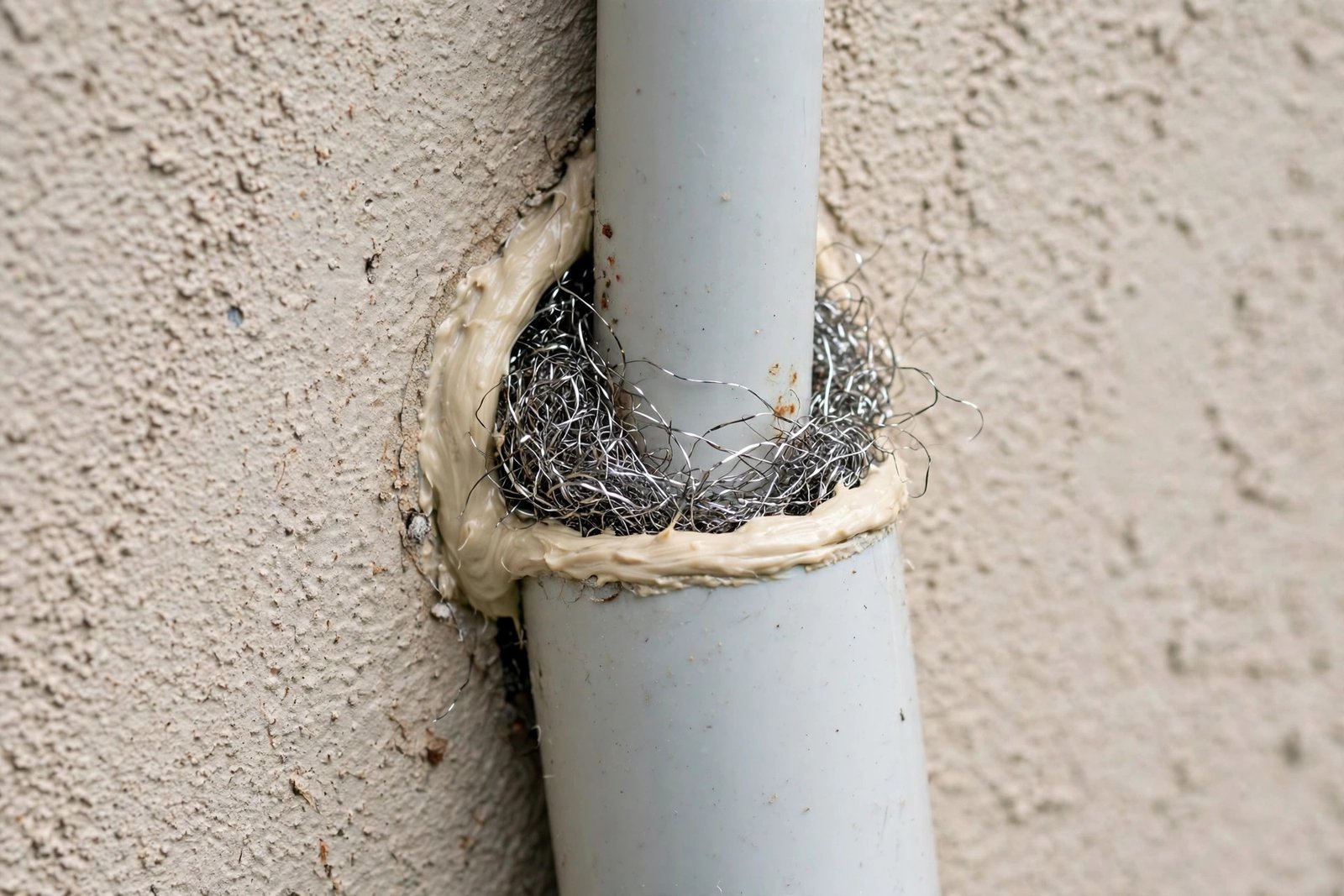
- Utility penetrations: Inspect where pipes, cables, wires, and other services pass through exterior walls.
- Other structural gaps: Check openings around windows, exterior joints, and penetrations.
Interior Inspection
The inspection may also consider:
- Gaps beneath sinks and around plumbing.
- Openings behind appliances.
- Gaps around heating or water-heating equipment.
- Openings around floor and dryer vents.
- Signs of rodent movement in attics, garages, storage areas, or wall-adjacent spaces.
A visible opening is not automatically an active rodent entry point. A provider should consider the opening’s location, size, condition, and any nearby evidence before recommending a repair.
You can work through the same checks yourself with our rodent entry point checker.
Sealing Mouse Entry Points
Mice can enter through very small openings. The CDC notes that a mouse can fit through a hole about ¼ inch (6 mm) wide.
Sealing entry points for mice therefore requires attention to small gaps that might otherwise be overlooked.
Common areas to inspect include:
- Gaps around pipes beneath kitchen and bathroom sinks.
- Openings where electrical or utility lines enter the building.
- Gaps around windows and doors.
- Spaces around vents and other wall penetrations.
- Openings near appliances and utility equipment.
- Gaps around the garage and foundation.
How Are Small Mouse Entry Points Sealed?
The material should be selected according to the size, location, and purpose of the opening.
Depending on the situation, suitable rodent-resistant materials may include:
- Metal mesh or hardware cloth.
- Metal flashing or sheet metal.
- Appropriate metal wool products used as part of a secure repair.
- Cement or other suitable patching materials.
- Properly fitted door sweeps and weatherstripping.
The objective is to create a durable barrier rather than simply hide the hole.
For homeowners interested in rodent proofing a house, the important step is to inspect both the visible opening and the surrounding structure. A repair that leaves an adjacent gap may not address the access route.
Sealing Rat Entry Points
Rat exclusion requires attention to openings that rats can use around foundations, doors, garages, rooflines, and utility penetrations.
The location of the opening can provide clues about the likely access route. Roof rats are capable climbers and may use elevated parts of a building, while Norway rats are more commonly associated with ground-level activity and burrowing.
Sealing rat entry points may involve:
- Repairing gaps around roof edges and soffits.
- Securing damaged vent screens.
- Reinforcing openings around utility penetrations.
- Addressing gaps around garage doors.
- Repairing suitable openings around exterior walls and foundations.
- Using appropriate metal or masonry materials where required.
A provider should choose materials based on the opening and the building surface. A repair suitable for a small pipe penetration may not be appropriate for a larger foundation opening.
If live rats are already inside, sealing work should be coordinated with an appropriate removal plan. Simply closing an opening without considering rodents that may remain inside can create additional problems.
Attic Rodent Proofing
Attics can be vulnerable to rodent entry through openings around roof features, vents, soffits, and other building penetrations.
Rodent proofing an attic focuses on identifying these potential access points and determining which openings need screening, sealing, or repair.
An attic rodent-proofing assessment may consider:
- Damaged or missing vent screens.
- Gaps around roof penetrations.
- Openings around soffits and fascia.
- Gaps between roofline components.
- Utility openings entering attic spaces.
- Signs of rodent movement near suspected access points.
The appropriate repair depends on the building design and the location of the opening. Some repairs may involve screening or metal materials, while others may require a suitable building repair.
Does Attic Proofing Include Rodent Removal or Cleanup?
Not automatically.
Attic proofing addresses possible entry points. It does not automatically remove live rodents, clean droppings, replace insulation, or disinfect contaminated surfaces.
If rodents are already present, you may also need:
Attic Rodent Removal in Houston
Related service — not included in exclusion unless confirmed in the provider’s written estimate.
Rat Droppings Cleanup & Attic Sanitation in Houston
Related service — not included in exclusion unless confirmed in the provider’s written estimate.
Confirm which services are included in the provider’s written estimate.
Garage Rodent Proofing
Garages can provide access to a property through gaps around overhead doors, side doors, wall penetrations, and other openings.
Rodent proofing a garage should focus on the areas where the garage door meets the floor and surrounding frame, along with gaps around pipes, cables, and walls.
An assessment may look at:
- Worn or damaged garage-door bottom seals.
- Gaps along the sides of overhead doors.
- Spaces around side-entry doors.
- Openings around pipes and electrical lines.
- Damaged or missing vent screens.
- Gaps where walls meet the floor.
How to Rodent-Proof a Garage
The right approach depends on the type of opening.
Common options may include:
- Replacing worn garage-door bottom seals.
- Installing suitable side weatherstripping.
- Repairing gaps around service penetrations.
- Screening appropriate vents.
- Using rodent-resistant materials to close suitable openings.
- Repairing damaged sections of the building envelope.
Garage-door seals should fit the door and floor correctly. A seal that leaves gaps at the corners or sides may not provide the intended barrier.
Also keep stored food, pet food, rubbish, and other potential attractants in appropriate closed containers. Removing food sources supports exclusion but does not replace physical repairs.
Door and Small-Gap Sealing: How to Keep Mice From Entering Under a Door
A gap beneath an exterior door can provide a route for mice to enter a home.
If you are wondering how to keep mice from entering under a door, start by checking whether the door closes properly and whether the bottom seal touches the floor evenly.
Door Sweeps
A properly fitted door sweep attaches to the bottom of a door and helps close the gap between the door and floor.
Choose a suitable product for the door type and floor surface. The sweep should close the gap without preventing the door from opening and closing correctly.
Weatherstripping
Weatherstripping can help close gaps around door frames and door edges. Worn or damaged material should be assessed and replaced where appropriate.
Door Thresholds
A suitable threshold can help create a more consistent seal beneath an exterior door. The threshold and door sweep should work together without leaving gaps at the ends.
What to Put Under a Door to Keep Mice Out
For a permanent repair, a properly fitted door sweep or suitable threshold is generally more appropriate than a temporary object placed against the door.
Do not rely on towels, loose fabric, or other temporary barriers as a long-term rodent-proofing solution.
Will Duct Seal Keep Mice Out?
Duct seal is not a universal rodent-proofing material.
The term can refer to different sealing products, and suitability depends on the product’s intended use, the surface, the opening, and whether the material can resist rodent damage.
For a rodent entry point, the important question is whether the completed repair creates a durable, rodent-resistant barrier.
Do not assume that applying duct seal or ordinary soft sealant to a hole will prevent mice from chewing through it or accessing an adjacent opening.
A provider should assess the penetration and choose an appropriate repair material. Metal mesh, metal flashing, suitable patching compounds, or other materials may be more appropriate depending on the location.
Home Rodent Prevention: How to Make Your Property Less Attractive to Rodents
Physical exclusion is an important part of rodent prevention, but it works best alongside good sanitation and property maintenance.
The CDC recommends reducing access to food, water, and shelter as well as sealing holes and gaps.
Practical Rodent Prevention Steps
- 1Seal suitable openings — Inspect the building for gaps around doors, windows, vents, foundations, rooflines, and utility penetrations.
- 2Store food securely — Keep food, pet food, and other edible materials in suitable containers with tight-fitting lids.
- 3Manage rubbish — Use bins with secure lids and avoid leaving accessible food waste around the property.
- 4Reduce shelter — Keep storage areas organised and avoid unnecessary piles of materials where rodents could hide.
- 5Maintain exterior openings — Repair damaged screens, worn seals, and openings around doors and service lines.
- 6Check for new signs — Look for fresh droppings, gnaw marks, or other signs that rodents may still be entering.
- 7Address active rodent problems — If rodents are already inside, exclusion may need to be coordinated with trapping or another appropriate removal service.
Rodent Control and Prevention: Why Both Matter
Rodent control addresses existing activity. Rodent prevention aims to reduce the conditions that allow rodents to enter and remain in a property.
A property may need both.
For example, removing mice without sealing a suitable access opening may leave the same route available for future entry. Similarly, sealing an opening without addressing rodents already inside may not resolve the existing problem.
Does Rodent Exclusion Work?
Yes, properly planned rodent exclusion can help reduce the routes rats and mice use to enter a building.
Its effectiveness depends on several factors:
- Whether the relevant entry points are identified.
- Whether openings are sealed with suitable materials.
- Whether repairs are durable and properly fitted.
- Whether less obvious openings are also assessed.
- Whether active rodents inside the property are addressed.
- Whether food, water, and shelter sources are managed.
- Whether new damage or openings are checked over time.
Rodent proofing is not a guarantee that rodents will never enter again. Buildings can develop new gaps, materials can deteriorate, and additional openings may be overlooked.
The best approach is to treat exclusion as a practical prevention measure supported by inspection and property maintenance.
Rodent Proofing Cost in Houston, TX
The rodent proofing cost depends on the number, size, location, and condition of the openings that need attention.
A property requiring a small number of accessible repairs may need a different scope from one with several roofline openings, damaged garage seals, and multiple utility penetrations.
Factors that may affect the total rodent exclusion cost include:
- Number of entry points: More openings can require more inspection and repair work.
- Size of openings: Larger gaps may need different materials and repair methods.
- Location: Roofline, attic, foundation, garage, and wall openings can differ in accessibility.
- Material requirements: Metal mesh, flashing, sheet metal, masonry, or other suitable materials have different costs.
- Repair complexity: Some openings may require more than simple sealing.
- Access requirements: Difficult-to-reach areas may require additional equipment or labour.
- Existing damage: Damaged screens, door seals, or building materials may need repair or replacement.
- Follow-up requirements: Additional inspection or monitoring may be offered separately.
How Much Does It Cost to Rodent-Proof a House?
There is no single price that applies to every Houston property. The cost of rodent proofing a house should be based on an assessment of the actual openings and the repairs required.
When requesting an estimate, ask:
- How many openings were identified?
- Which entry points will be sealed?
- What materials will be used?
- Are garage-door seals and door sweeps included?
- Are attic and roofline repairs included?
- Does the estimate include labour and materials?
- Are difficult-access repairs charged separately?
- Is a follow-up inspection available?
- Are rodent removal and cleanup separate services?
A clear written estimate should identify the openings, recommended repairs, materials, and any work excluded from the price.
How to Choose a Rodent Exclusion Provider in Houston
When searching for rodent exclusion near you, look for a provider who can explain where rodents may be entering and why the proposed repair is appropriate.
Before approving the work, consider:
- Inspection details: Ask which areas were checked and which openings were identified.
- Repair recommendations: Request an explanation of how each opening will be addressed.
- Material selection: Ask why the proposed materials are suitable for the opening and building surface.
- Scope of work: Confirm whether the estimate includes attic, garage, roofline, and utility-opening repairs.
- Existing infestation: Ask whether live rodents need to be removed before or alongside exclusion.
- Follow-up: Find out whether a follow-up assessment is available.
- Qualifications: Verify relevant Texas credentials for any regulated pest-control work.
- Written estimate: Confirm labour, materials, exclusions, and additional charges.
Texas regulates structural pest-control work performed for hire. Verify the credentials relevant to the actual work and provider rather than assuming that every building repair has the same licensing requirements.
Sealing works best when you know where rodents get in, so start with our tour of common rodent entry points in houses. For mice, this guide to sealing a house against mice covers materials and gap sizes, and for roof rats, these roof rat prevention tips deal with trees, rooflines and the exterior.
Exclusion is usually paired with rat removal or mice removal when live activity is still present.
Frequently Asked Questions About Rodent Exclusion and Proofing
What is rodent proofing?
Rodent proofing is the process of identifying and closing openings that rats and mice may use to enter a building. It can include sealing gaps, installing suitable screens, repairing door seals, and reinforcing vulnerable areas.
Does rodent exclusion work?
Yes, properly identified and sealed entry points can reduce rodent access. Results depend on the quality of the inspection, materials, repairs, and whether other openings or active rodents remain.
How do I rodent-proof my house?
Inspect both the inside and outside of the property. Check doors, windows, foundations, rooflines, vents, and utility penetrations. Seal suitable openings with materials appropriate for the location, and reduce accessible food, water, and shelter.
How do I rodent-proof my garage?
Check the bottom and sides of garage doors, side-entry doors, wall penetrations, and vents. Repair damaged seals and close suitable openings with durable materials designed for the location.
How do I keep mice from entering under a door?
A properly fitted door sweep, threshold, and suitable weatherstripping can help close gaps beneath and around an exterior door. Check that the seal fits evenly and does not leave gaps at the corners.
What should I put under a door to keep mice out?
A fitted door sweep or suitable threshold is a more durable solution than a towel or temporary barrier. The correct product depends on the door and floor configuration.
Will duct seal keep mice out?
Do not rely on duct seal as a universal rodent barrier. Its suitability depends on the specific product and opening. A durable repair may require a different material, such as metal mesh, flashing, or an appropriate patching material.
Can mice enter through a ¼-inch hole?
The CDC states that mice can fit through an opening approximately ¼ inch (6 mm) in diameter. Small gaps should therefore be included in a rodent-proofing inspection.
Does rodent proofing remove rats and mice already inside?
No. Exclusion addresses potential access points. Rodents already inside may require a separate removal plan before or alongside sealing work.
Does attic rodent proofing include attic cleanup?
Not automatically. Sealing attic entry points is different from removing droppings, cleaning contaminated insulation, or sanitising surfaces. These services should be confirmed separately.
How much does rodent proofing cost in Houston?
The price depends on the number, size, location, and accessibility of openings, as well as the materials and repairs required. Request a written estimate based on the actual inspection findings.
Can I seal rodent entry points myself?
Some accessible, minor repairs may be suitable for a capable homeowner. Roofline, electrical, utility, ventilation, and structural openings may require specialist assessment or repair. Choose a qualified professional where safety or building integrity is involved.
Need Rodent Exclusion or Proofing in Houston?
If you have noticed mice entering beneath a door, gaps around your garage, or possible rodent access near your roofline, identifying and addressing those openings is an important part of prevention.
Rodent Control Houston connects property owners with independent service providers for rodent-related assistance. Contact us to discuss your property and ask about arranging an entry-point assessment.
Inspection, sealing, repair, and prevention services depend on provider availability, qualifications, inspection findings, and the agreed scope of work.